Lyncombe Hill Fields supports a range of interesting features typical of the Cotswolds, including traditional grassland, old hedgerows with wonderful mature trees, areas of scrub, and small, developing woodlands.
Some pockets of grassland rich in wild flowers can be found across the fields and we are managing the whole site to improve the wildflower diversity. Plants such as cowslip, bird’s-foot trefoil, salad burnet, black knapweed, glaucous sedge, rough hawkbit, and the pretty quaking grass are present. In some areas yellow meadow ants make their anthill homes in the fields. In summer the grasslands hum with common meadow grasshoppers and a number of butterfly species flit around the site, including marbled whites and gatekeepers.
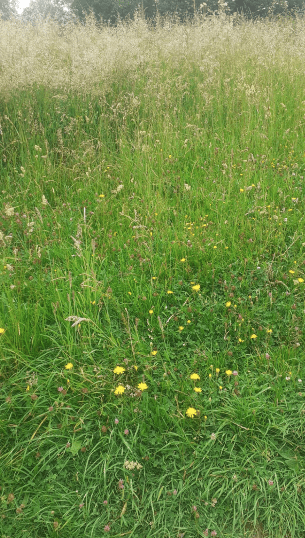
Grass, Flower rich grassland – photo by Peter McSweeney
The hedgerows comprise a range of shrubs and mature trees, including hazel, hawthorn, spindle, elder and holly, topped with large ashes and sycamores, with some majestic field maples and a healthy elm.
Dog’s mercury and ramsons grow along many of the hedgerows, which is sign of their age. In some corners of the site, blackthorn scrub presents a wonderful sight in spring as it’s splashed with dense, white blossom.
Bats are frequent visitors in the warmer months, flying along the boundaries. The dead wood around the Fields is great for insects and fungi, and our newly planted hedges and three Tiny Forests will encourage wildlife in the future.

Oxeye Daisies – Photo by Anita Breeze
Our monthly bird surveys have logged over 40 different species. In summer chiffchaffs sing and many woodland birds are present all year round, such as nuthatches. Two bird feeding stations are maintained.
We have put up over a dozen nest boxes, which have successfully supported breeding blue tits and great tits over a number of years. A kestrel is a regular visitor too, often swooping down on small mammals. Some bat boxes have been placed around the site and some small pools placed in quiet corners to support the local wildlife.
The edges of the fields are allowed to grow tall with grasses, cow parsley, nettle, hemp agrimony, teasel and brambles, to provide a food source for insects and other bugs, as well as cover for other animals. Toads are often found when the long grass is cut during summer.
We have carried out some hedge laying to turn a sparse row of saplings and a hazel towards the top of Jacob’s Ladder into what we hope, will be a thick and substantial hedge. The shrubs that are cut and then bent over will be reinvigorated, and their horizontal boughs will send up new vertical shoots to recreate height and bulk over the next few years. In the past this was the traditional way of creating barriers that kept farm stock in the fields, before modern barbed wire fences. It is possible to see some weirdly shaped mature trees on the site providing evidence of hedge laying, maybe from 80+ years ago in the fields.
Our volunteers will continue to carry out wildlife surveys and so far we have logged over 200 different species, recording them in the amazing iNaturalist App; you can too anytime – simply download the App and get started. If you visit the LHF notice board you will be able to see our guide to what has been found where.
 Home
Home 